
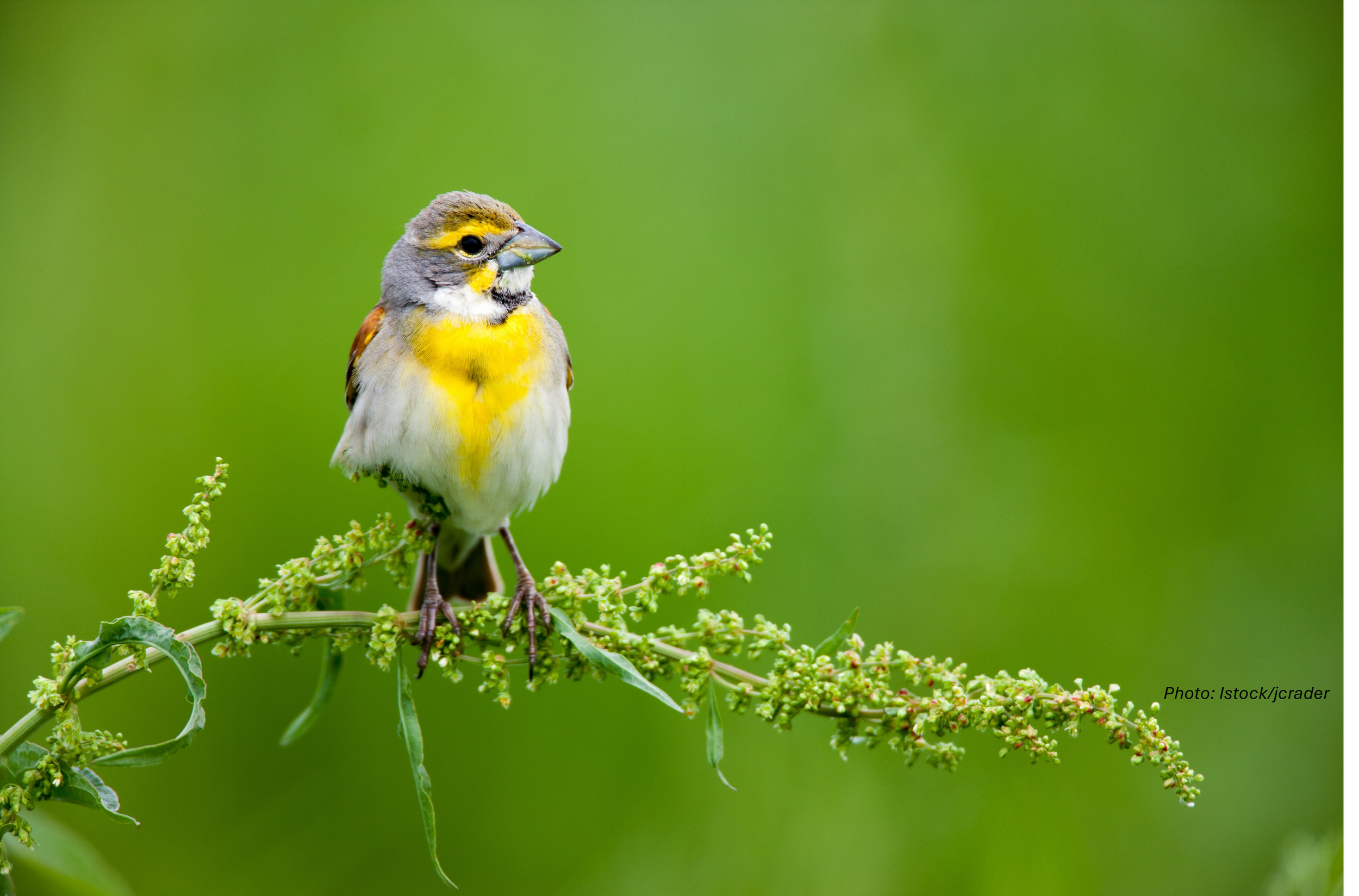
Birds are vanishing.
Habitat loss is a big reason why.
Habitat starts at home.
Birds live everywhere, and every yard, balcony, garden, and business landscape can help support them.
Every Yard Matters
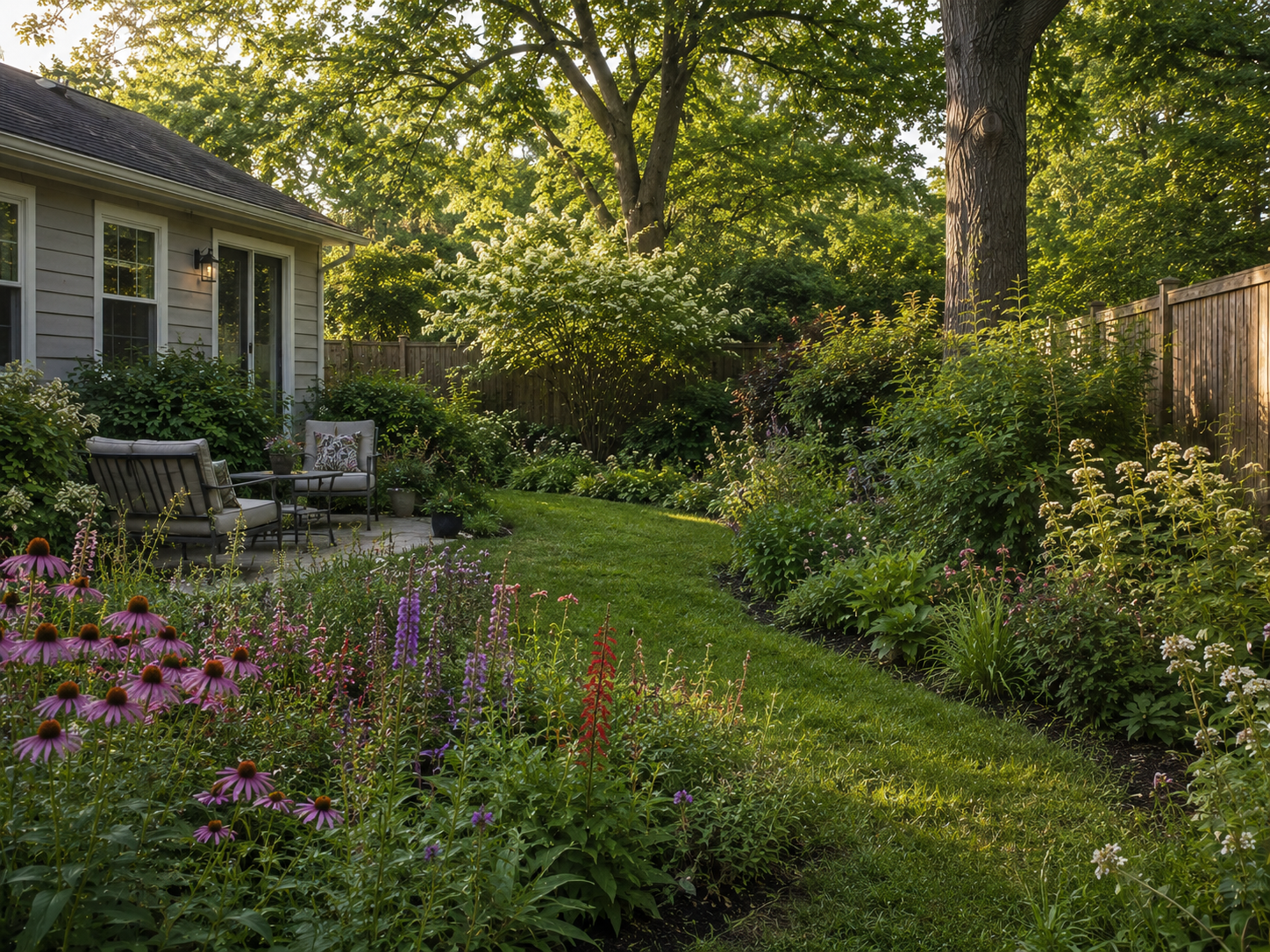
Whether you have a balcony, backyard, or business landscape, your space can help support birds.
And creating habitat doesn’t mean giving up beauty or personal style. Native plants can be designed to fit formal, modern, tidy, or naturalistic spaces while still supporting the living food web birds depend on.
Native plants bring birds back. Whether you have a yard, balcony, or business, you can create meaningful habitat right where you are. Every plant counts.
What do Birds Need?
We often associate birds with seeds, watching them visit our bird feeders, but the truth is that insects are the primary food source for most birds.
96% of terrestrial birds feed their young an exclusive insect diet.
Pollinator gardens are a great start and help support important insect life. But birds also need trees, shrubs, shelter, nesting habitat, and layered vegetation to successfully raise young.
Native plants help provide the living food web birds need to survive.
Learn how insects, native plants, and habitat work together to help bring birds back, one yard at a time.
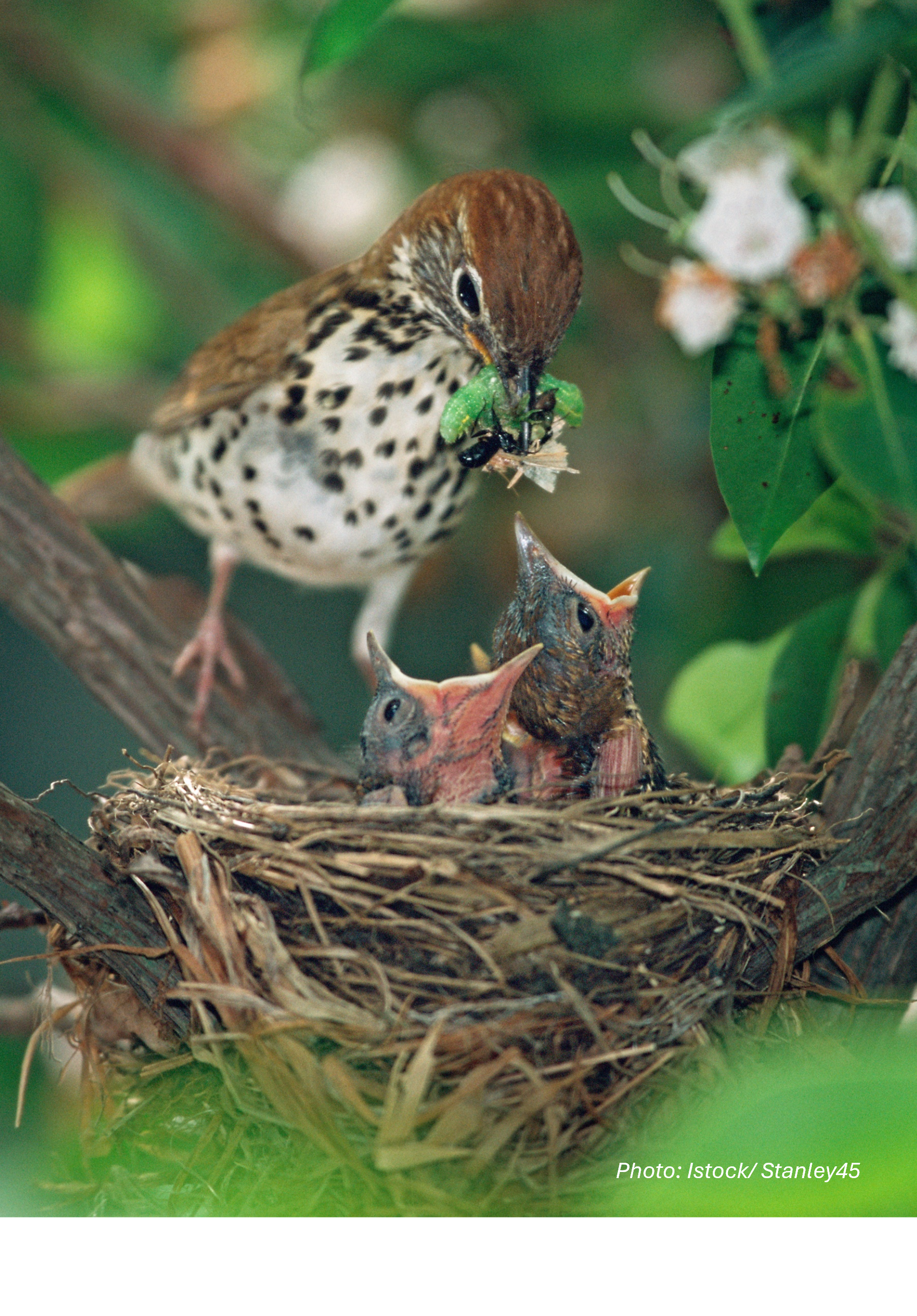
9,000 Caterpillars
To raise just one brood of young.
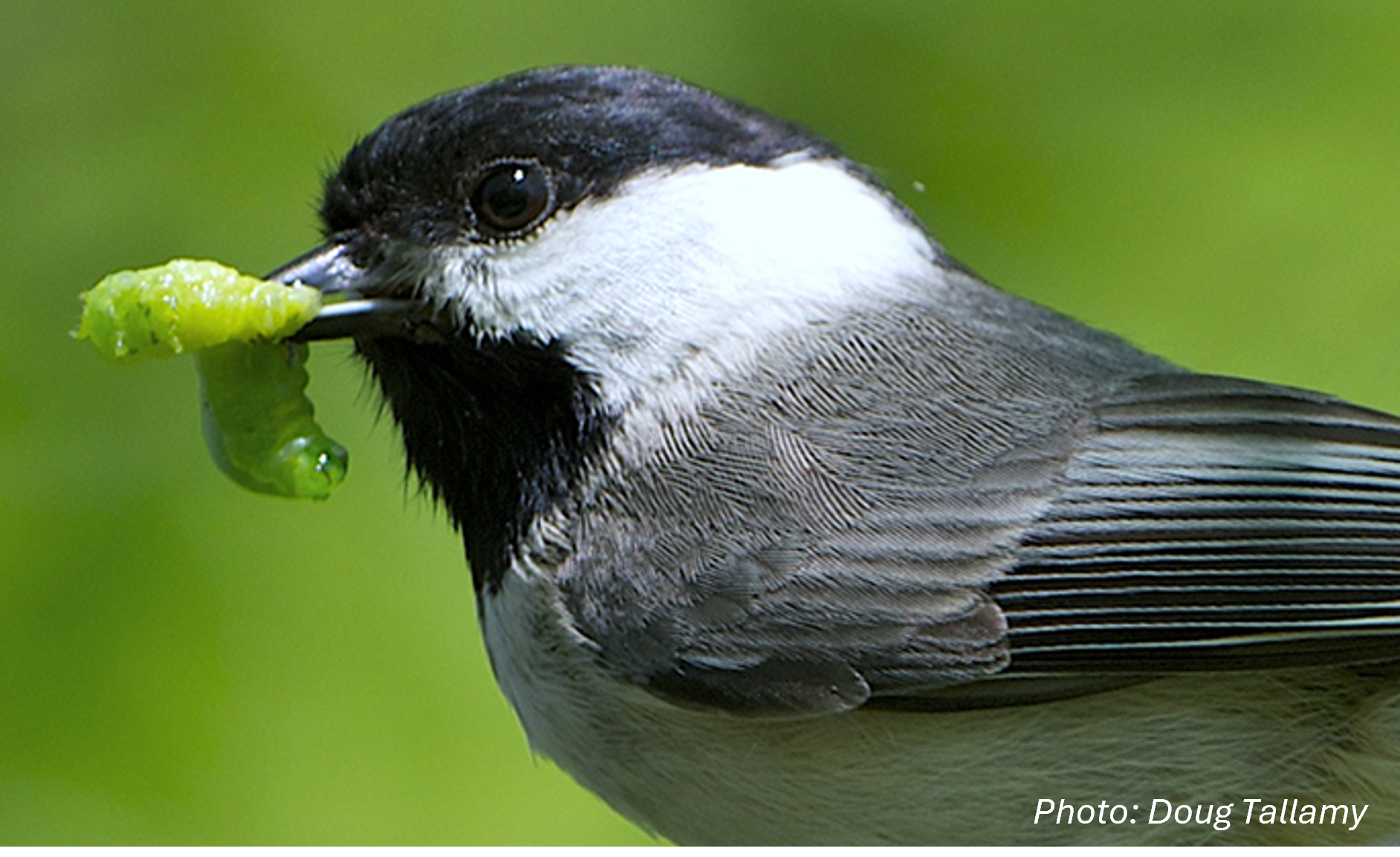
Parent chickadees make hundreds of trips searching for soft-bodied insects to feed their nestlings.
When native plants disappear, so do the caterpillars and insects birds depend on to raise their families.
Read about a study filming which insects parent birds bring to the nest and see exactly which insects birds prefer.
Selecting Plants
This section is currently being updated to bring you all the information you need in one place. Everything you need to get started is included the bird habitat planting guide below. In the meantime, please enjoy the sections we are completing now.
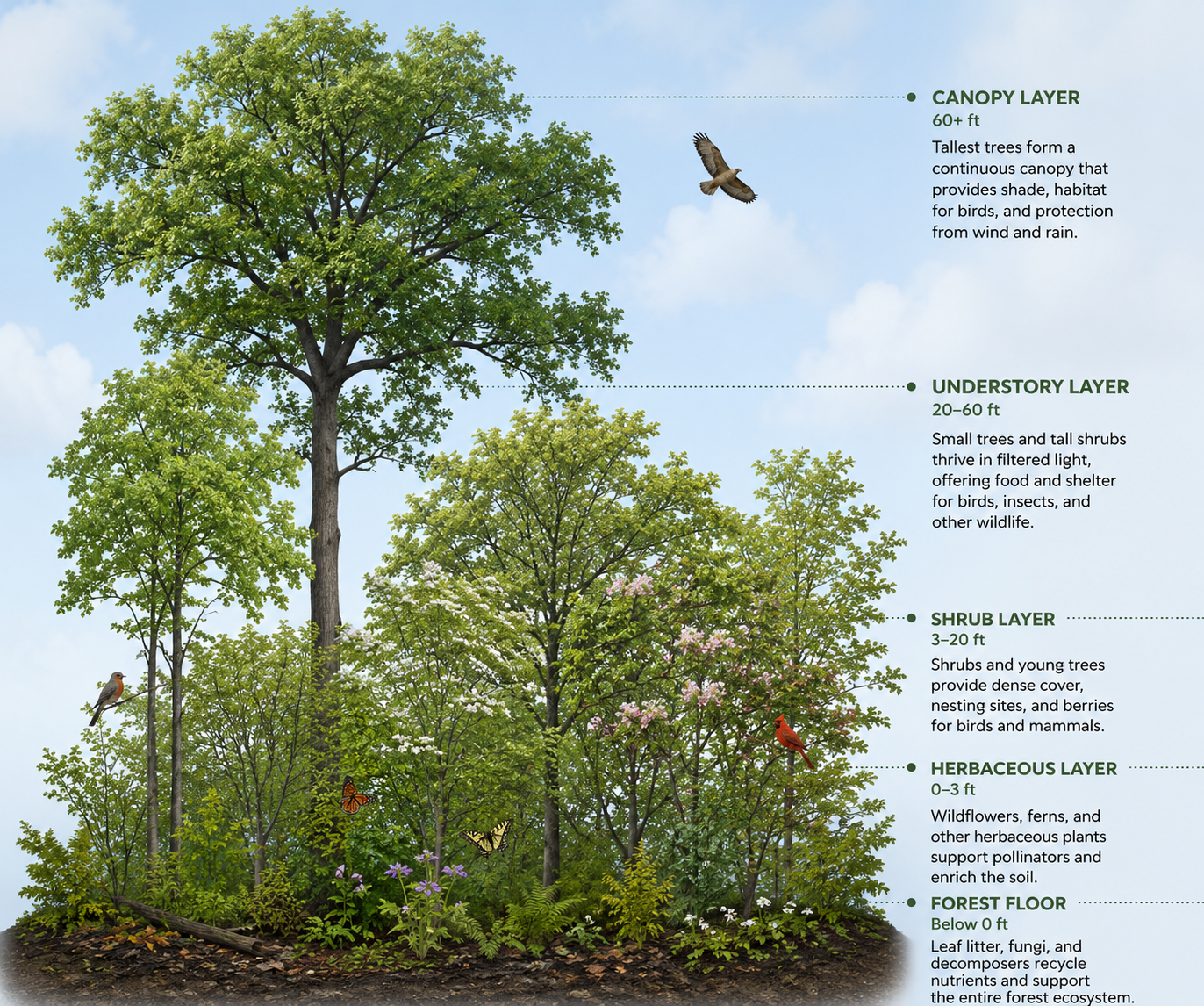
Good bird habitat has vertical structure, layers of vegetation at different heights. We divide these layers into categories depending on, in part height: canopy, understory, shrubs, and herb layer (flowers and grasses)
The goal is to connect these layers to form a living corridor that allows birds to move through the landscape while remaining sheltered from predators and the elements.
A simple way to start building habitat is to include at least one plant from each layer: canopy, understory, shrub, and herb.
If you only have room or budget for one addition, plant a tree. Trees support enormous amounts of insect life while also providing food, nesting habitat, shelter, and shade.
We’ve pulled together the top plants for supporting and attracting birds so you can optimize your space and investment.
Explore each habitat layer below to see which plants you can add to your yard.
Native plant and bird communities vary across Minnesota, so some species may be more appropriate in certain regions than others. We are working to bring region specific restoration guides so keep checking back.
Frequently Asked Questions
-
Cultivars, often called “nativars,” are cultivated versions of native plants that have been selectively bred for certain traits like flower color, leaf color, size, or shape. Some can still provide value for wildlife, but others may reduce ecological benefits.
In general, avoid cultivars with traits like red or purple leaves, highly altered flower colors, or double blooms. Double flowers can make nectar and pollen difficult or impossible for pollinators to access, while dark leaf colors may support fewer insects than straight native green leaves. Changes in flower color may also affect how pollinators recognize and use plants.
Many cultivars are also cloned from a single plant rather than grown from seed. This reduces genetic diversity, which is important for the long-term health, resilience, and adaptation of plant populations.
When possible, choose straight native species grown from seed.
-
Ornamental plants are species or cultivars grown mainly for decoration rather than ecological value. Many common landscape plants were imported from other continents and did not evolve alongside North American insects and wildlife.
Because of this lack of evolutionary relationship, many native insects either cannot recognize ornamental plants as food or cannot survive on them. Even plants from the same genus but from a different continent can support nearly 70% fewer insect species. That matters because insects, especially caterpillars, are essential food for birds and other wildlife.
Imported ornamental plants have also introduced serious pests and diseases, including emerald ash borer, Dutch elm disease, and hemlock woolly adelgid, which have devastated native trees and ecosystems.
Native plants help rebuild the food web ornamental landscapes often fail to support.
-
They don’t have to. Native plantings can be designed to look neat, intentional, and beautiful while still supporting wildlife.
Simple design choices like defined edges, paths, mulch, repetition, and layered plantings can make native landscapes look organized and inviting. Many native plants also offer striking flowers, fall color, berries, and winter interest.
Our idea of a “tidy” yard often comes from traditional lawns and tightly controlled landscaping, but nature is not sterile. A healthy habitat will have more life, movement, and seasonal change—and that’s part of its beauty.
-
No. You do not need to remove everything at once. Focus on gradually adding more native plants over time, especially trees and shrubs that provide the greatest benefit to wildlife.
Prioritize removing invasive species first, since they can spread into natural areas and damage ecosystems. Small changes made consistently can have a big impact.
-
First, don’t panic. Most insects on native plants are harmless or beneficial, and many are an important part of the food web. Caterpillars and other insects feed birds, pollinators, and countless other species.
A few chewed leaves are normal and actually a sign your habitat is functioning as intended. Native plants evolved alongside native insects and are usually able to tolerate some feeding without harm.
Before reaching for pesticides, try identifying the insect and determining whether it’s truly causing serious damage. In many cases, nature balances itself through predators like birds, spiders, and beneficial insects.
-
Any native plant helps. Even adding a few native trees, shrubs, or flowers can provide food and habitat for birds, pollinators, and other wildlife.
For stronger ecological impact, research suggests aiming for about 70% native plant biomass in your landscape. Studies found that when native plant levels dropped below that threshold, yards were far less able to support the insects birds need to raise their young.
The good news is you do not need to do everything at once. Every lawn converted, every native shrub planted, and every pesticide-free habitat patch helps rebuild the food web, yard by yard.
-
No. Even small spaces can provide meaningful habitat. A few native plants, a native shrub, a container garden, or replacing part of a lawn can provide food and shelter for wildlife. Small habitat patches also help reconnect fragmented landscapes across neighborhoods and cities.
-
Start small. Replace part of your lawn, add a native shrub or tree, or plant a few native flowers in an existing garden bed. Focus first on native trees and shrubs, which provide the greatest ecological value.
You do not need to transform your entire yard overnight. Every native plant added helps rebuild habitat and reconnect the food web, yard by yard.
For larger projects in prairie regions, especially in western Minnesota, tree and shrub plantings may not always be appropriate. These ecosystems evolved as naturally open grasslands, and adding too many trees can negatively impact prairie wildlife and alter the character of the habitat. In these areas, restoration efforts often focus more on native grasses and flowering plants suited to prairie ecosystems. Contact us directly for help with prairie restorations.
Download our easy guide to determine which plants to include in your yard to attract birds and help them! Whether you manage a yard, garden, small business, school or corporate campus, you can restore vital habitat and make a real difference for birds, butterflies, pollinators - and people

Learn how to turn you yard, balcony, or shared green space into bird and pollinator habitat

Create meaningful green space that benefits birds and people alike.