
What Do Birds Feed Their Young?
When we think about bird food, we often picture seeds and bird feeders. But during nesting season, the vast majority of birds rely on insects to raise their young. In fact, 96% of terrestrial birds feed their nestlings an exclusive insect diet. A recent study of Eastern Bluebirds found that caterpillars and other moth and butterfly larvae made up more than 40% of the food parents brought back to the nest. Grasshoppers, crickets, spiders, and beetles were also important, but caterpillars were by far the most common prey item.
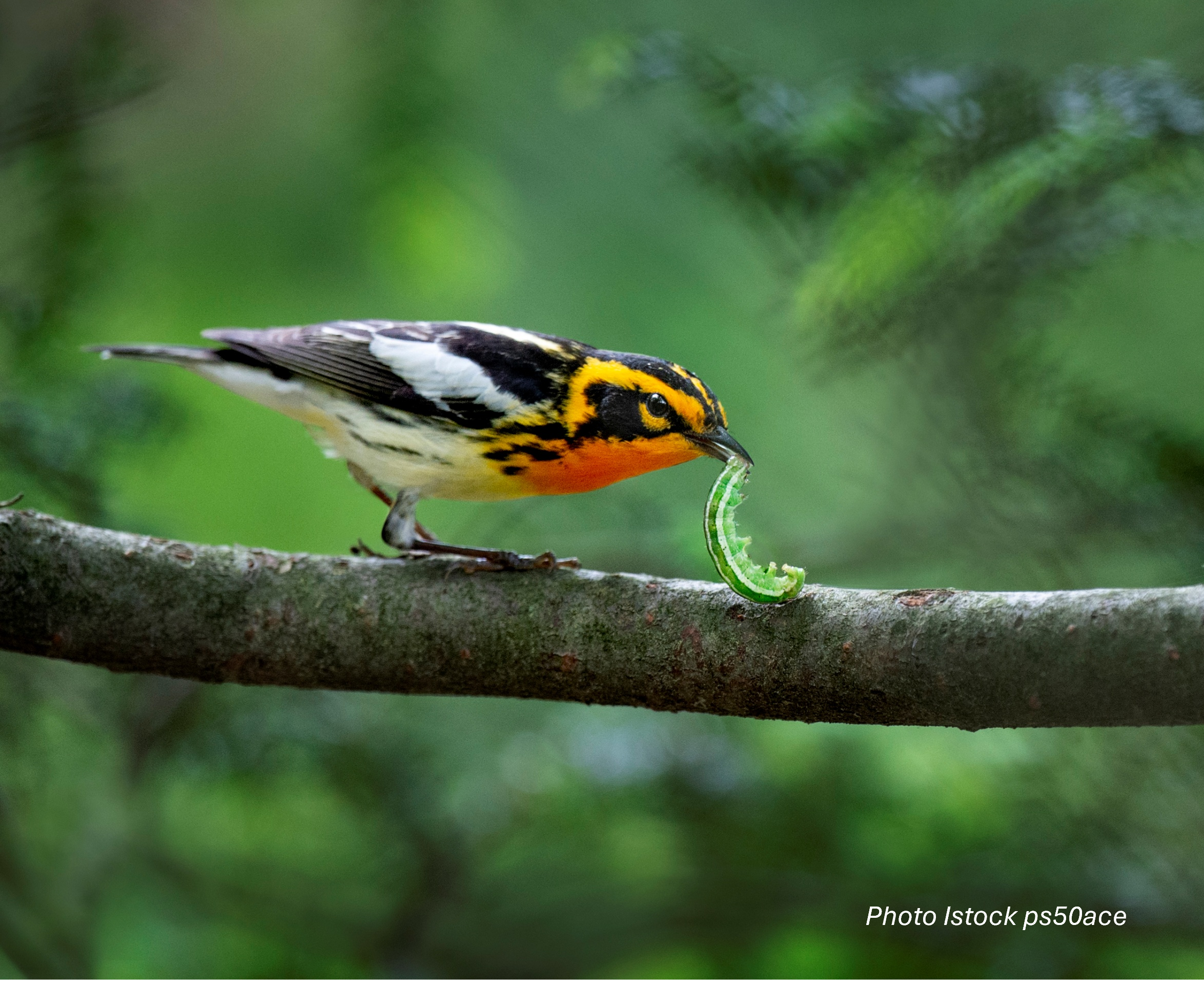
Why caterpillars? They’re essentially a superfood for growing birds. Caterpillars are soft-bodied, easy to digest, and packed with proteins, fats, and nutrients that nestlings need to grow quickly. They’re also rich in carotenoids, pigments that play an important role in the bright red, orange, and yellow plumage many birds use for communication and attracting mates. Parent birds spend their days searching for thousands of insects to feed their young, turning the energy stored in plants into the next layer of the food web. Without insects, birds simply cannot successfully raise families.
That’s where native plants become so important. Most caterpillars can only survive on specific native plants they evolved alongside over thousands of years. Native trees, shrubs, and wildflowers support far more insect life than most ornamental or non-native plants. Keystone trees and shrubs are caterpillar powerhouses. Learn which keystones you can include in your yard here.
When native plants disappear from our landscapes, the caterpillars disappear too, creating food deserts for breeding birds. By planting native species and tolerating a little leaf-chewing along the way, we help rebuild the living food web birds depend on to survive.
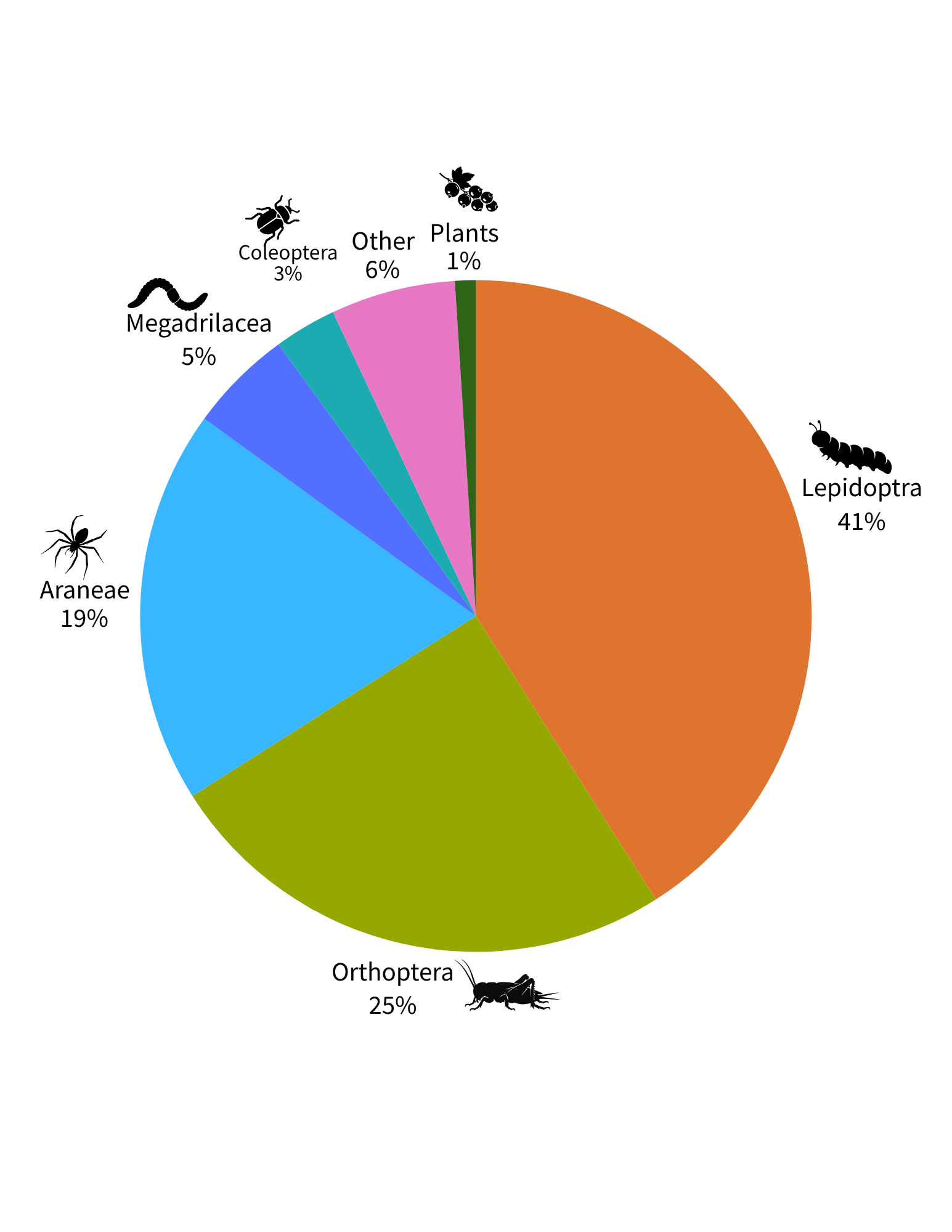
Kennedy et al. (2026) used nest box cameras and observations from citizen scientists monitoring Eastern Bluebird nest boxes to document the insects parent birds brought back to feed their nestlings. Caterpillars and other moth and butterfly larvae (Lepidoptera) made up more than 40% of the nestling diet, followed by grasshoppers and crickets (Orthoptera), spiders, beetles, and other arthropods.