
WINDOW COLLISION FACTS
What is a window collision?
A window collision occurs when a bird flies into glass—often at full speed—because it cannot see it as a barrier. While glass is the most common surface that birds collide with, they can also strike other highly reflective surfaces like polished metal or granite. This is different from defensive behavior, when birds repeatedly strike a window because they see their own reflection as a territorial rival.
Minnesota, right in the heart of the Mississippi Flyway, sees millions of migrants each season—many won’t survive the journey.
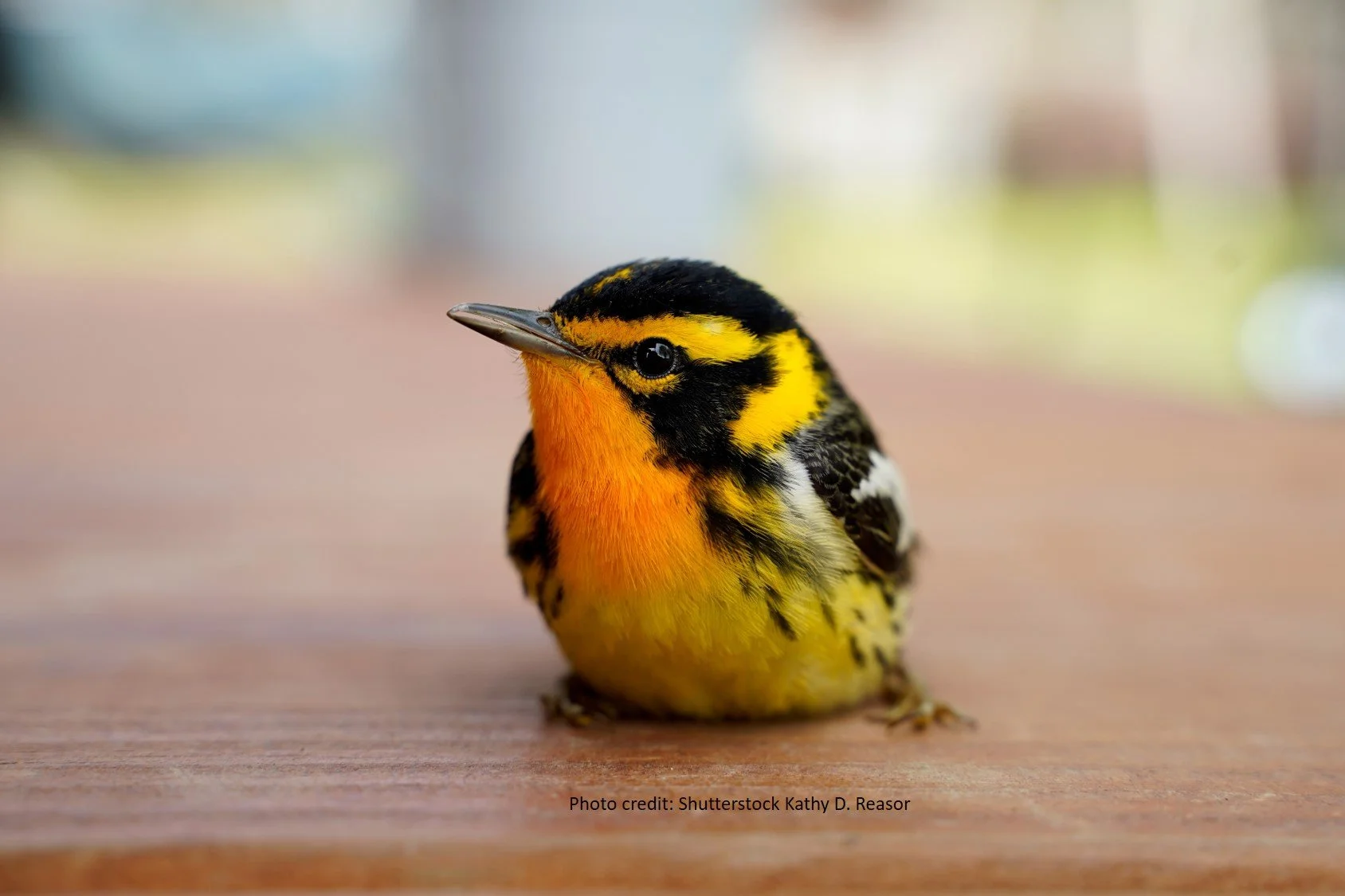
Pictured: A Minnesota migratory Blackburnian warbler, stunned after colliding with a residential window.
Note how the left foot is curled—a telltale sign of neurological trauma from the impact.
Why Do Birds Hit Windows
Two Factors play a role in window collisions; light and glass
LIGHT: Migratory birds are especially susceptible to window collisions. Many birds migrate at night, using the stars to navigate. But artificial lights from cities and neighborhoods interfere with that process. Once drawn in, birds must navigate a maze of buildings and glass.
GLASS: Glass has two properties that pose a challenge for birds; reflectivity and transparency.
Reflectivity: Glass can act like a mirror, reflecting nearby vegetation and sky. Birds perceive these reflections as real habitat and attempt to fly toward them.
Transparency: Birds can see through glass to habitat or light on the other side—like potted plants, trees, or sky-filled courtyards.
TEST YOUR VISION

Are these Trees Real or a Reflection?
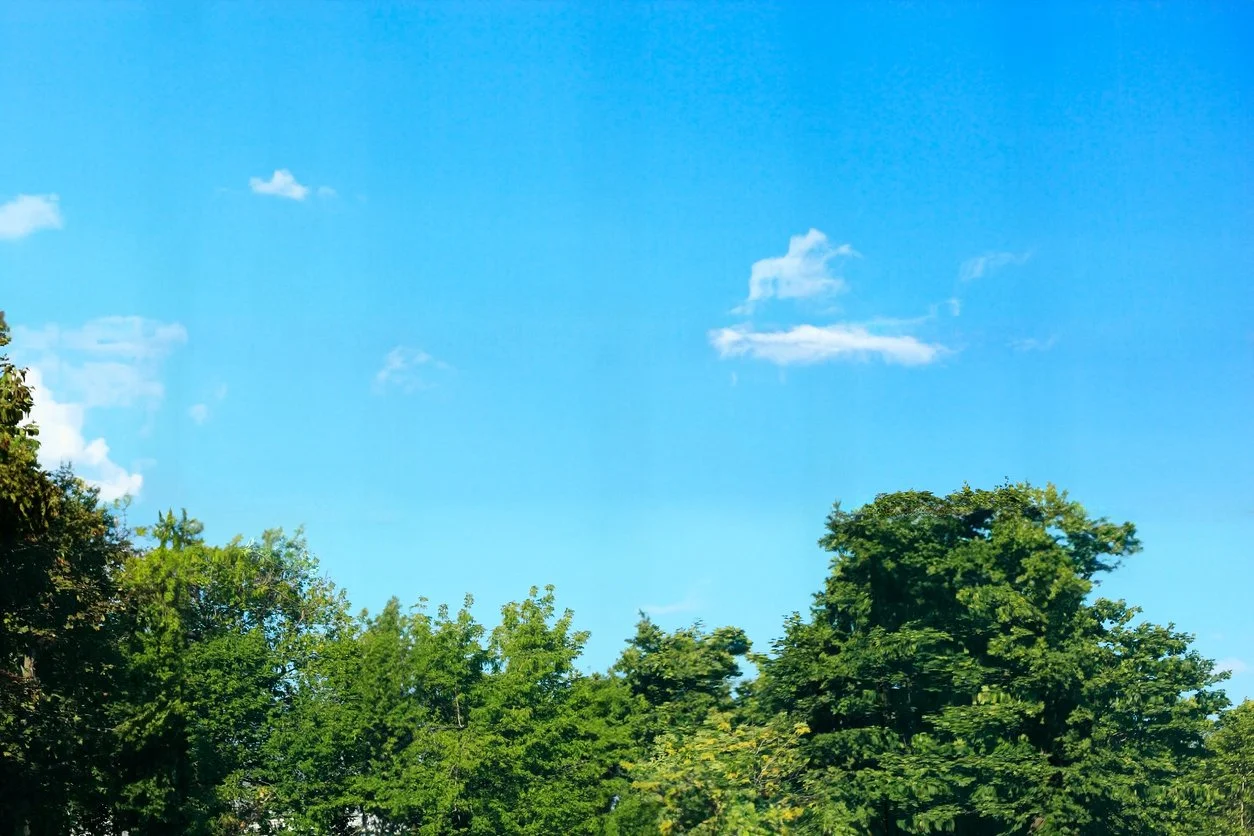
Reflections can look shockingly real—especially when they mirror trees, sky, or open space.
In this example, the image on the left was cropped from the full photo on the right. The black lines in the right image are window frames, which help us recognize it’s glass. But birds don’t understand those visual cues. They won’t fly into the dark lines—but they will try to reach the sky or branches reflected in between.
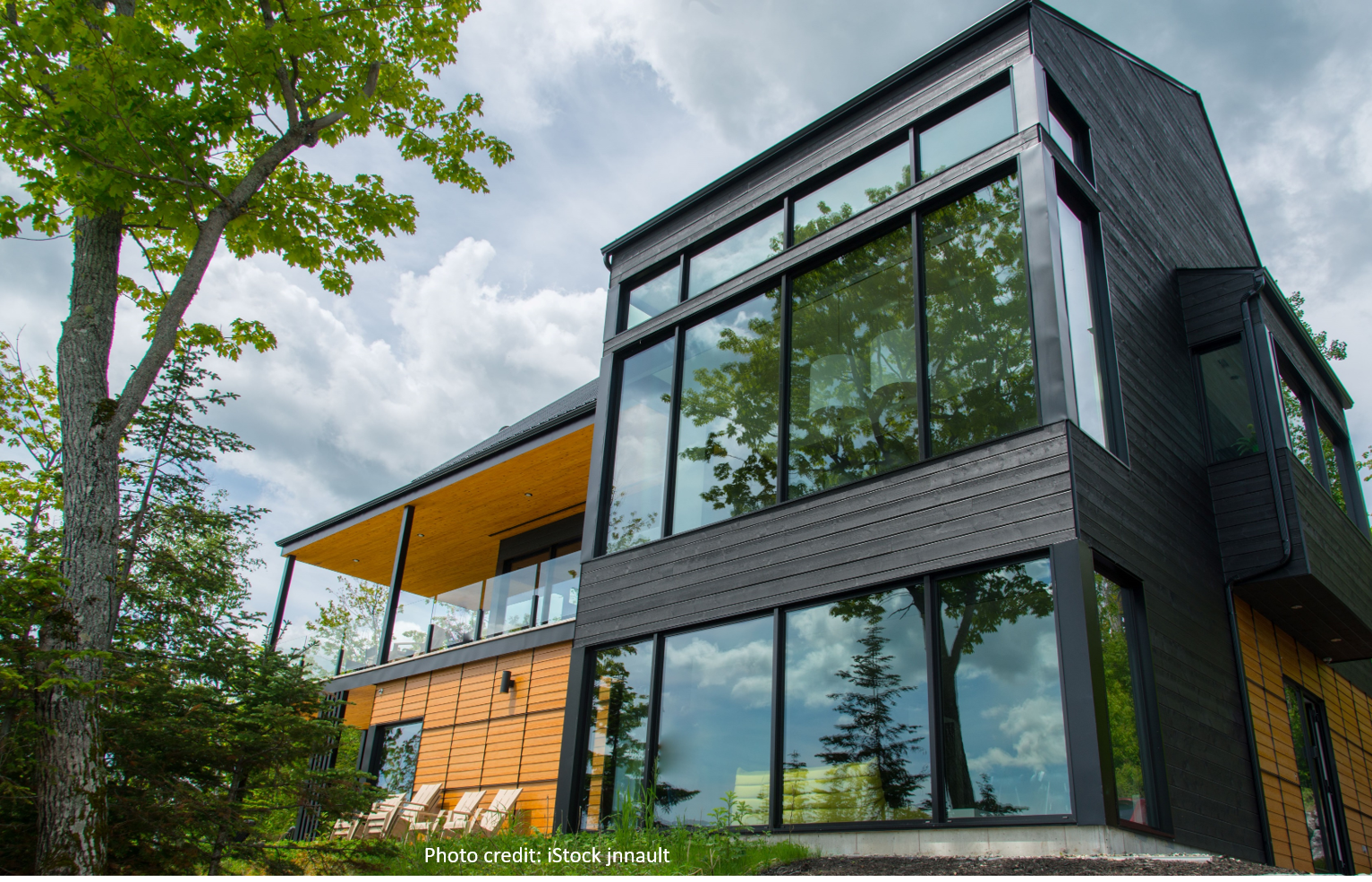
This image shows how reflections confuse birds. They mistake mirrored trees or sky in the glass for real habitat and try to fly into them. Artificial lighting makes the problem worse by drawing birds closer to windows.
What about these?

The window frames let us know this is glass, but birds interpret the reflections in between as real.
Test Your Window Collision Knowledge

Bird-window collisions are a serious conservation issue—but they’re also widely misunderstood.
Many common myths still shape how people think about this problem, and we’re here to bust them.
This short True or False quiz is designed to clear up confusion and highlight the facts. Tap each statement to learn more—and discover the truth behind some of the most common misconceptions.
-
FALSE. Less than 1% of collisions happen on buildings over 10 stories. In fact, 44% occur on homes and low-rise buildings (1–3 stories), and 56% on mid-rises (4–9 stories). That means the vast majority of bird collisions happen in neighborhoods and cities—not on skyscrapers.
-
FALSE. The sad truth is that most birds don’t survive a collision, even if they seem to fly off afterward. Internal injuries or brain trauma often lead to death hours—or even days—later. And even among birds that receive care at licensed rehab centers, fewer than 20% are considered healthy enough to release. Flying away doesn’t mean they’re okay.
-
FALSE. Birds can’t evolve to avoid what they can’t perceive. Glass is invisible to them, and their first encounter with it is usually fatal. For evolution to work, some birds would have to be able to understand glass, but that’s not the case. Glass tricks all birds.

Photo: flikr/agulivano
TRUE OR FALSE
-
FALSE. Strong, healthy birds collide too—glass doesn’t discriminate. Birds don’t see glass as a barrier, no matter how fit, experienced, or alert they are. It’s not a matter of survival of the fittest; it’s a matter of glass being invisible, and birds doing what evolution has trained them to do—fly toward habitat and light. The threat affects all species and individuals equally.
-
FALSE. Minnesota ranks 6th most dangerous state for birds when it comes to window collisions. Despite having lots of green space, we also sit directly on the Mississippi Flyway, a major bird migration route. That means millions of birds pass through our cities and suburbs each spring and fall—right where they encounter homes, glassy buildings, and artificial light.
-
FALSE. Just because you only find one bird doesn’t mean only one bird hit. Studies estimate that for every bird found after a collision, 5–6 more go unnoticed—either scavenged quickly, hidden in landscaping, or able to fly a short distance before dying. Most birds that hit glass don’t survive, even if they appear to fly off. So even one visible bird is likely just the tip of the iceberg.
PREVENTING WINDOW COLLISIONS AT HOME
Nearly half of bird-window collisions happen at homes and other low-rise buildings.
That means millions of birds lost each year could be saved—right from our neighborhoods.
If every household made just one window bird-safe, the collective impact would be enormous.
You don’t have to fix every window to make a difference. Start with one.
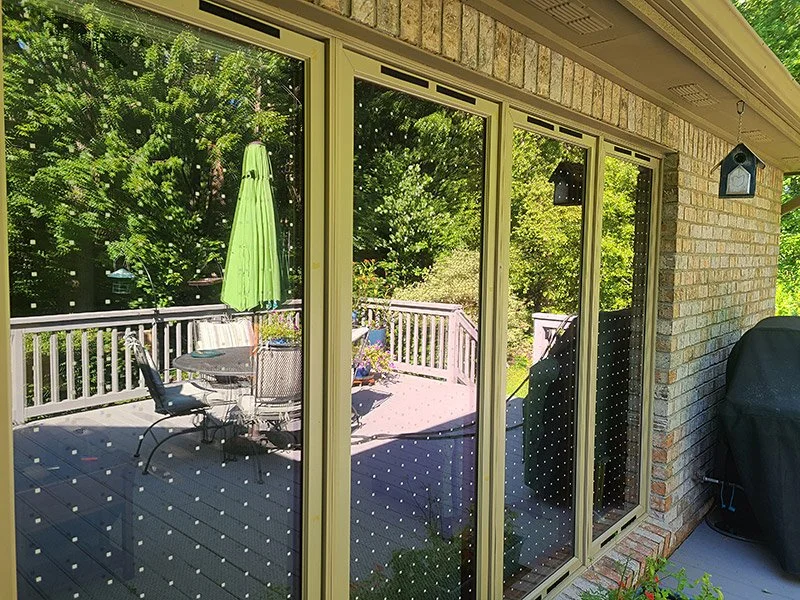
Residential windows treated with Feather Friendly Markers.
OTHER WAYS TO HELP
SPREAD THE WORD
Help raise awareness about window collisions and how to prevent them. You can download and print our brochure to help others take simple, effective steps to prevent window collisions.

VOLUNTEER
From participating in citizen science to helping with tech, outreach, design, or leadership—there are many ways to get involved. Whatever your strengths, your time and talent can help birds.
SUPPORT THE MISSION
Your donation fuels everything we do—from collision monitoring and advocacy to outreach and education.