
Lights out Alert Minnesota
The Window by Window Program of MNBC is recruiting for a new initiative to save migrating birds.
Lights Out Alert Minnesota
Why it’s important
Each year, over 1 billion birds die after colliding with windows. Migratory species are especially at risk—many fly at night, when artificial lights shine brightest. These lights lure birds off their natural routes and into built environments filled with reflective glass and other dangers.
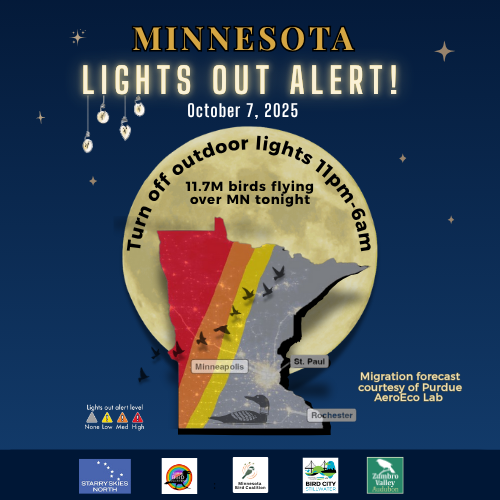
Lights Out Alert Minnesota (LOAM) tracks real-time migration forecasts and issues alerts on nights of heavy bird movement, urging Minnesotans to turn off unnecessary lights. By targeting high-risk nights, the program aims to reduce collisions, identify patterns in migration risk, and build statewide coordination around bird-safe practices.
Click here to learn more.
Requirements
Comfortable using Canva to update a simple template create the alert graphic.
Reliable internet and ability to post to social or email.
Clear communication and attention to detail.
We provide a short training and step-by-step checklist.
Time commitment & duration
Peak seasons: spring migration Mar 15–May 31 and fall migration Aug 15–Oct 31.
Cadence: 1–2 short check-ins per assigned week during the seasons.
On alert nights: an extra 15–30 minutes to publish and share the alert.
Ready to get involved? Fill out our quick volunteer form to let us know you’re interested in Lights Out Alert Minnesota — and we’ll be in touch soon!
What you’ll do
Monitor migration forecasts from Purdue AeroEco Lab on assigned days.
Drop the new forecast map and numbers into our shared alert template.
Share the alert through our channels and partner network.
When possible, notify local contacts like building managers or city staff so they can turn lights off.
Craft and coordinate outreach communications including social media posts, alert emails, and website updates.
Opportunities to be part of expanding the program.
Collision monitoring is a core part of MNBC’s Window by Window program. Volunteers play a vital role by not only rescuing injured birds but also collecting data that informs local advocacy efforts and contributes to national, long-term scientific studies. Your observations help shape policies, guide building retrofits, and drive meaningful change for birds in Minnesota and beyond.


