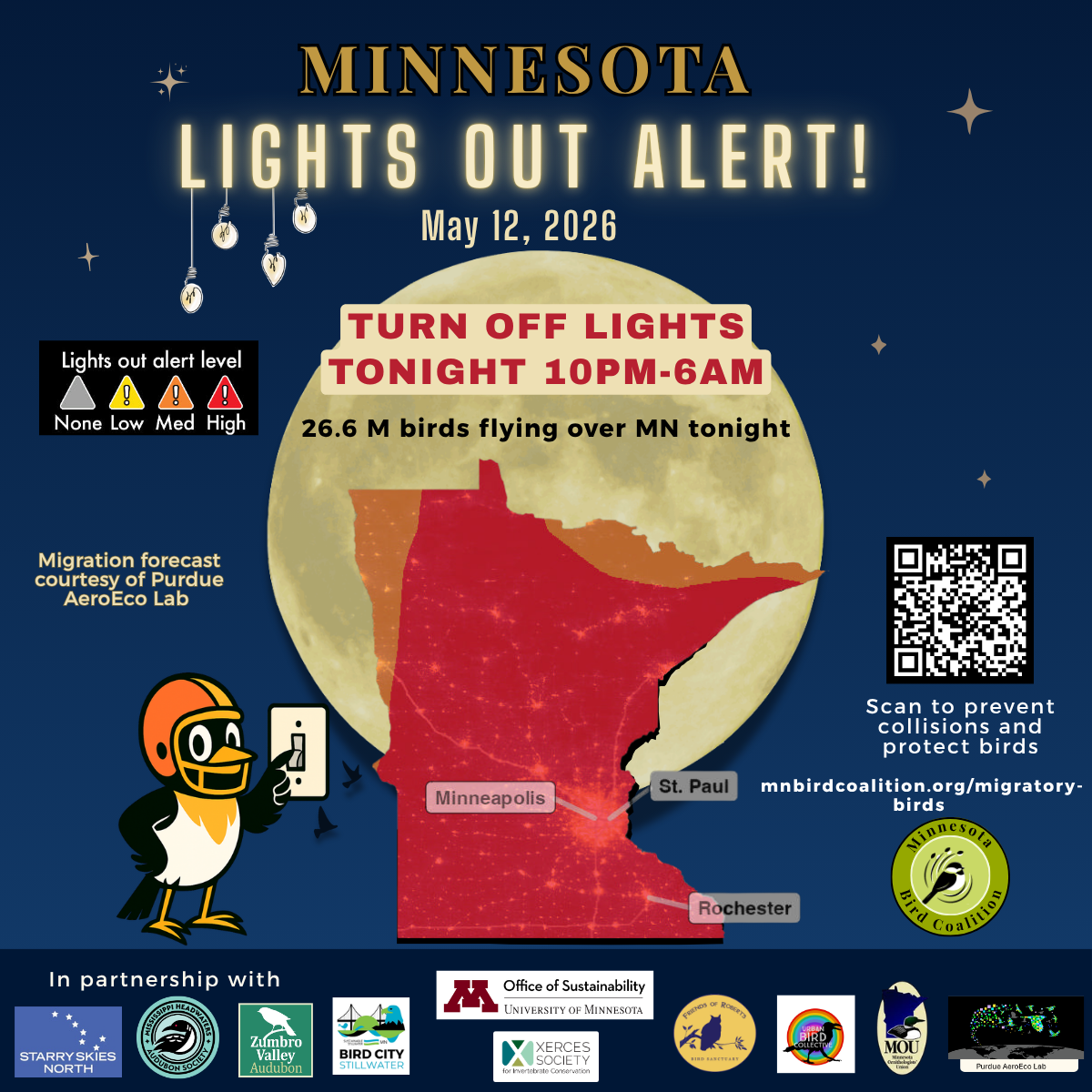
Lights Out Alert Minnesota

Photo: iStock: manpuku7
Minnesota Skies
Artificial light at night confuses migrating birds, drawing them off course and into brightly lit cities and towns. In these human-dominated landscapes, they face a range of dangers from degraded habitat and free-roaming cats to collisions with glass.
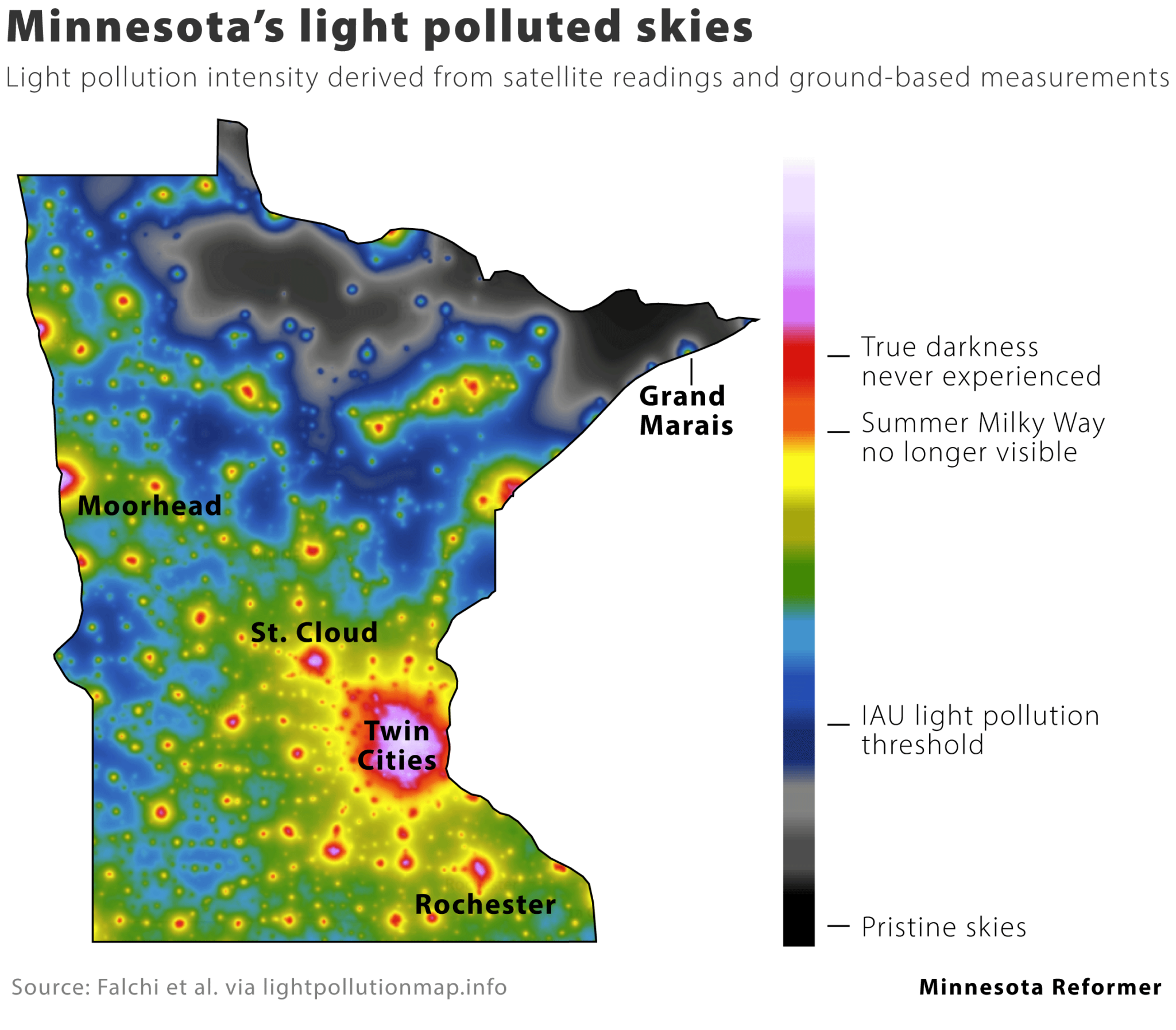
Satellite-based light-pollution data reveal that Minnesota’s night skies are extensively brightened by artificial light, even outside major cities.
Light Pollution Harms Far More than Birds
Human health
Nighttime lighting disrupts sleep cycles, hormone regulation, and overall circadian rhythms. Chronic exposure is linked to higher rates of insomnia, anxiety, and metabolic and cardiovascular issues. Reducing unnecessary light supports healthier communities.
Star-gazing
Excess light washes out the night sky. More than 80 percent of people in the United States can no longer see the Milky Way where they live. Protecting dark skies preserves scientific discovery, cultural connection, and the simple experience of seeing the stars.
Plants
Artificial light interferes with natural seasonal cues. Trees and other plants exposed to nighttime lighting may delay leaf drop, alter flowering times, and stay physiologically “awake,” which increases stress and vulnerability.
Insects
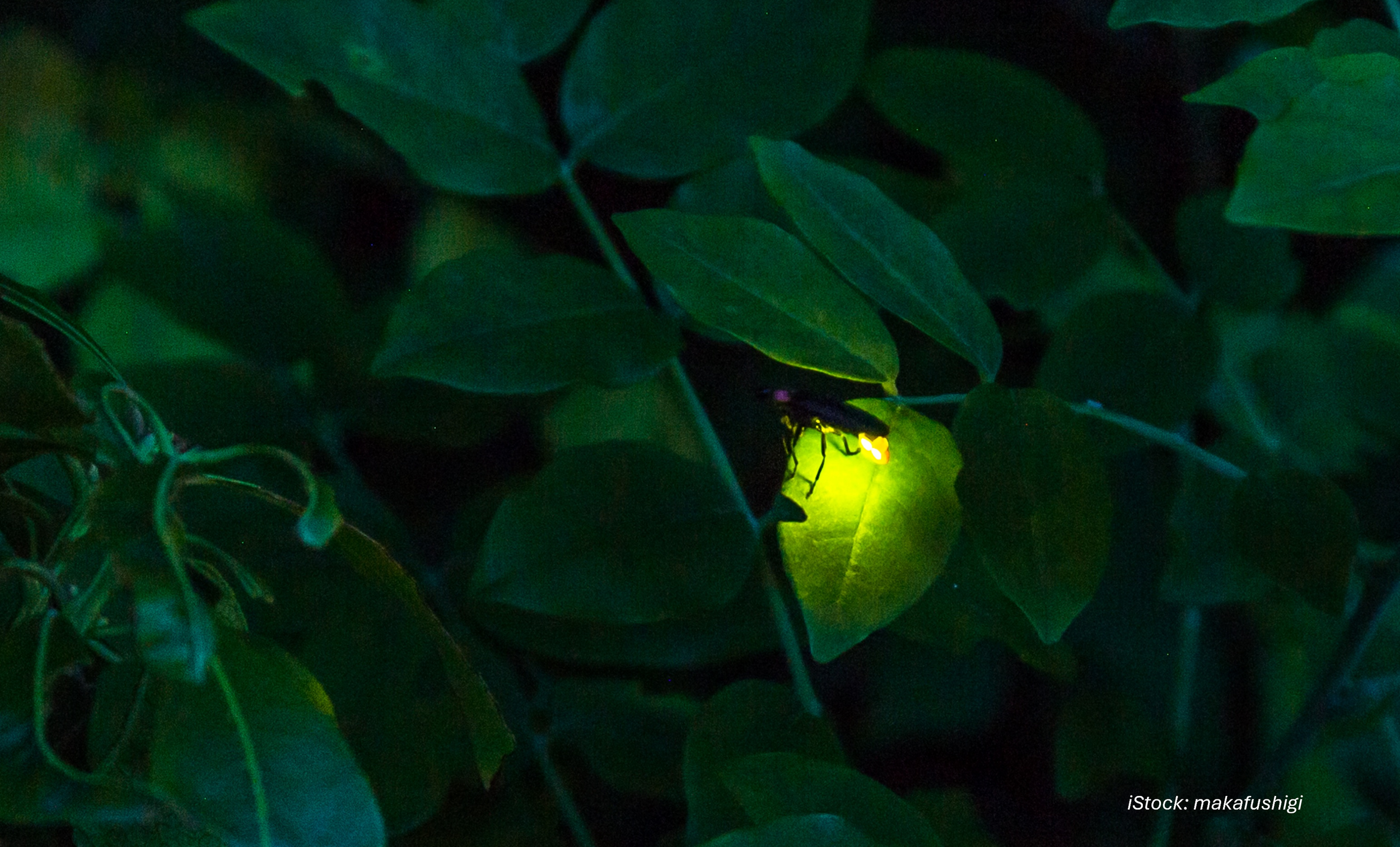
Artificial light disrupts insect navigation, feeding, mating, and predator avoidance. Many insects are drawn to lights, become exhausted, and die. Fireflies are especially sensitive because even small amounts of light interfere with their mating signals. Insect losses ripple through entire ecosystems. For more on supporting fireflies, see the Xerces Society’s guidance on how you can help.
Other wildlife
Mammals, amphibians, reptiles, and fish rely on natural dark–light cycles. Artificial light disrupts migration, feeding, and breeding, and alters predator–prey interactions. Reducing excess lighting benefits wildlife across entire landscapes.

Photo: iStock Ricardeitmeyer
Building on the Lights Out Alert System
Lights Alert Minnesota is built on the work of Purdue University’s AeroEco Lab, the research group that created the Lights Out Alert System. Their team uses weather radar, atmospheric models, and migration ecology to produce real-time forecasts showing how birds are moving across the landscape. Their work has made migration science accessible to conservation groups and communities across the country. We use these forecasts to help Minnesotans understand regional movement patterns and stay informed throughout migration season. Lean more about Purdue AeroEco Lab
Lights Out Alert Minnesota
Lights Alert Minnesota, a new initiative led by MN Bird Coalition, builds on the foundation established by Lights Out Minnesota. The new program creates a statewide network of conservation partners, cities, campuses, and organizations to reduce light pollution during migration.
This network uses migration forecasts generated by Purdue AeroEco Lab to identify nights of heavy bird movement and issues coordinated alerts across the state. On these nights, Minnesotans are asked to turn off unnecessary lights to reduce disorientation and collisions. By connecting local efforts into one coordinated system, Lights Alert Minnesota strengthens an established conservation effort and expands its reach statewide.
Our Partners
Lights Alert Minnesota is made possible through the support and collaboration of partner organizations across the state that share a commitment to protecting migrating birds and reducing light pollution.


Fly by Night
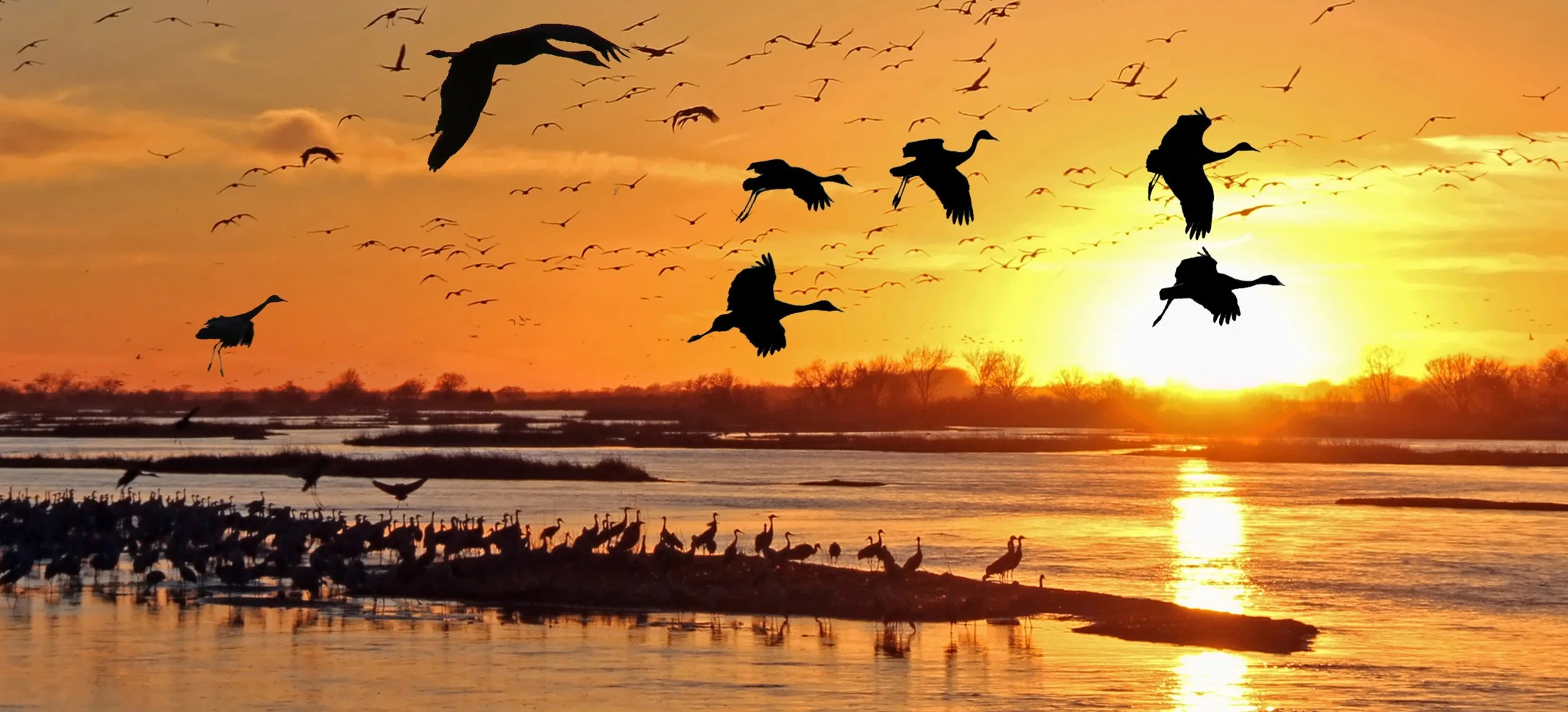
Every spring and fall, millions of birds migrate across Minnesota under the cover of night, using the stars and moon to find their way. Flying at night allows birds to take advantage of cooler temperatures, more stable air, and reduced risk from predators.


WHAT YOU CAN DO TO HELP