
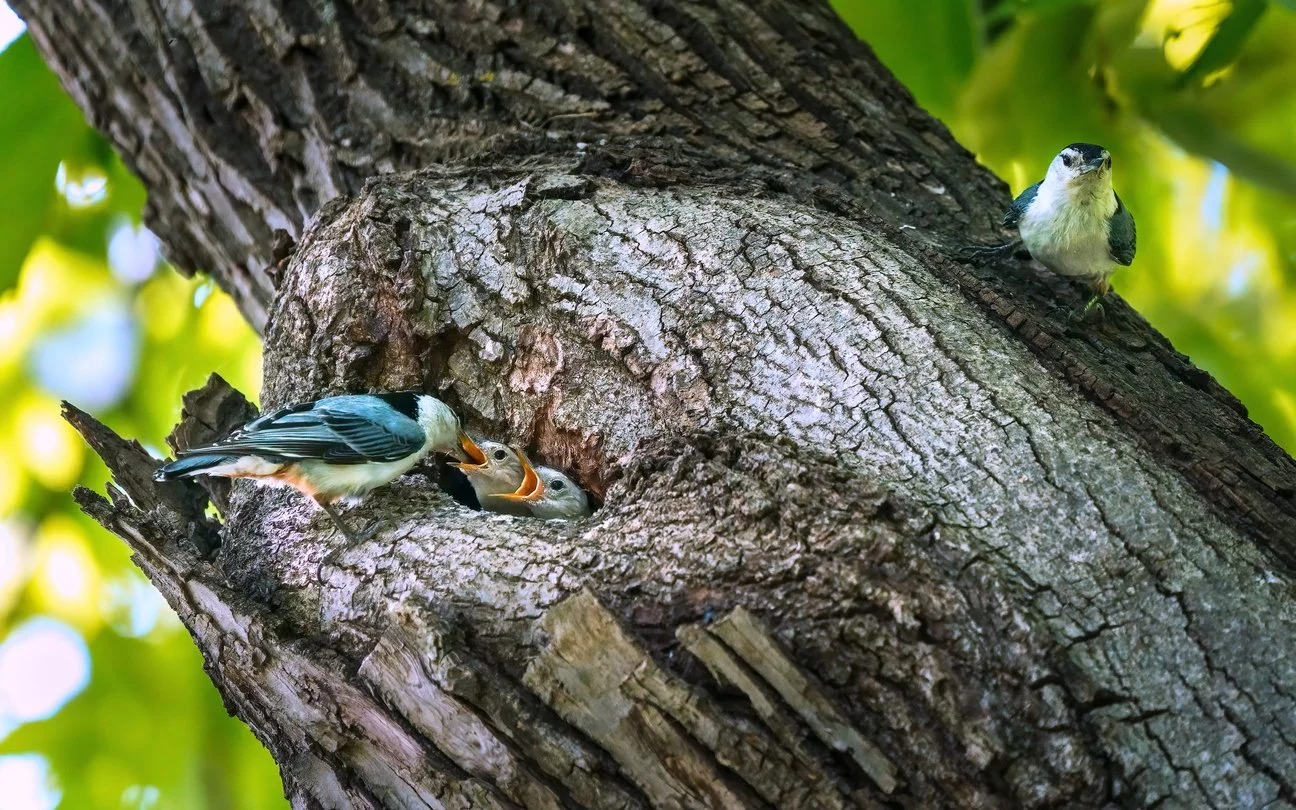
A pair of White-breasted Nuthatches raise their young inside a natural cavity formed in an old oak. One parent delivers food while the other keeps watch nearby. Mature oaks are among the most important nesting trees in Minnesota forests because they naturally develop hollows, cracks, and dead limbs over time. For the 35 bird species in Minnesota that must nest in cavities, old trees like these are not just habitat — they are essential homes.
-
Most oak species prefer full sun. Young oaks can survive for years in the understory, supported in part by underground fungal networks that connect mature trees. When canopy gaps open, these saplings rapidly accelerate growth.
-
Most oak species prefer moderate moisture levels. Some species tolerate wetter conditions and can help stabilize and absorb water in low-lying areas
-
Oaks are highly adaptable and can grow in a wide range of soil types. Some species are especially suited to sandy, rocky, or well-drained soils. Check individual species for specific site preferences.
-
White oaks are generally more resistant to oak wilt than red oaks. Avoid pruning oaks during spring and summer when beetles that spread the fungus are active..
Oaks are highly sensitive to soil compaction. Avoid heavy foot traffic and construction beneath the canopy. Replacing turfgrass under mature oaks with native shade-tolerant plants helps protect root systems and improves habitat value.
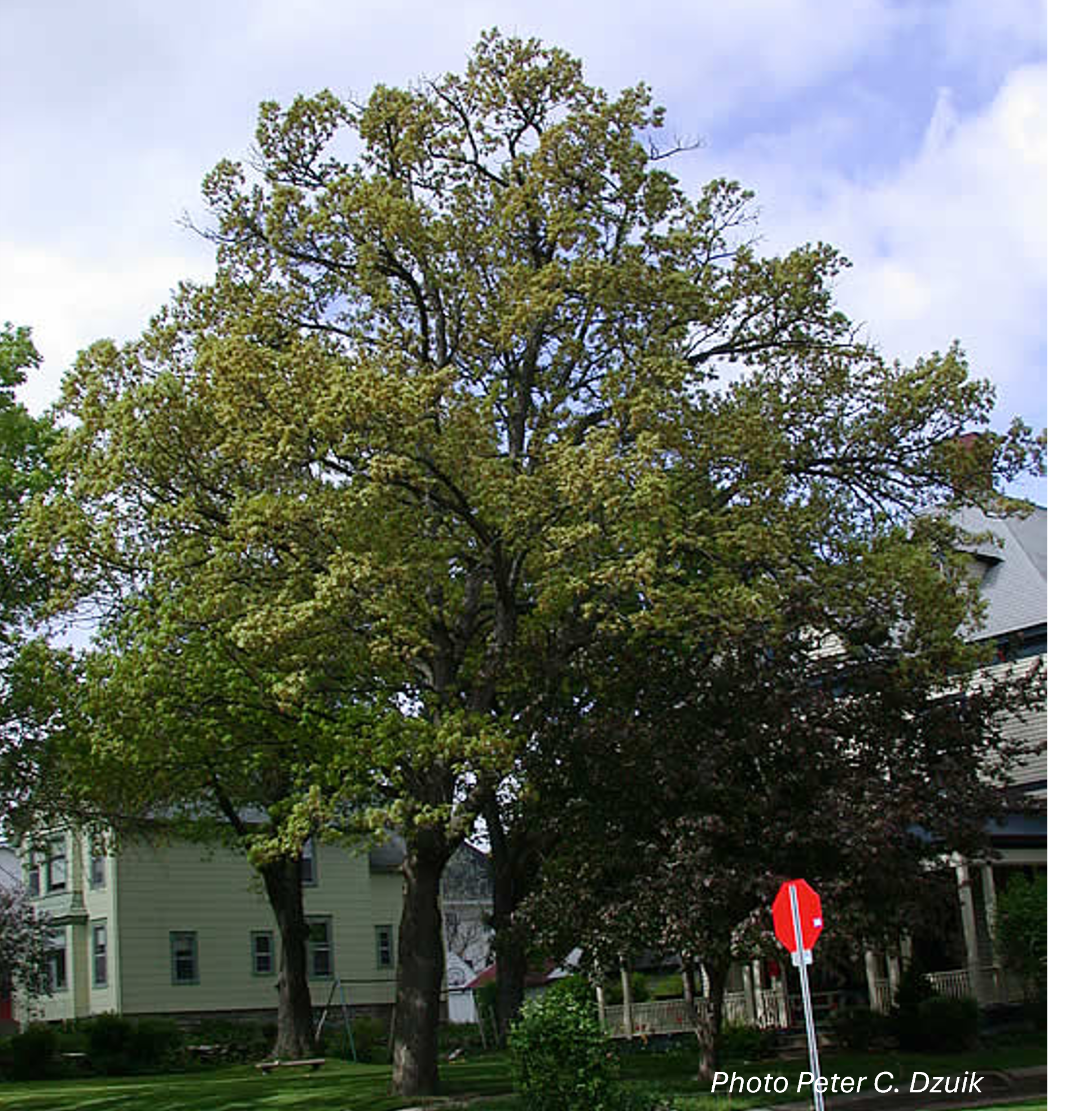
Quercus (Oak)
Why This Plant Matters
If you have room for only plant, plant an oak.
Oaks are among the most important keystone plants in Minnesota, supporting an astonishing 318 species of caterpillars that feed birds and other wildlife. Because of this, oaks are considered a keystone genus, meaning they support roughly 90% of the caterpillar species needed to sustain local food webs. For birds, especially nesting songbirds, these caterpillars are not optional. They are essential food for raising young. A single brood of chickadees may require thousands of caterpillars before fledging.
Oaks provide far more than insects. Their acorns feed woodpeckers, blue jays, wild turkeys, squirrels, deer, and many other animals. Their broad branching structure creates nesting sites and shelter for birds throughout the year. Deeply furrowed bark provides refuge for spiders, insects, and overwintering pollinators hidden within cracks and crevices.
As oaks age, they become even more valuable. Mature trees naturally develop cavities, hollow limbs, loose bark, and deadwood that provide critical nesting and roosting habitat for birds, bats, owls, wood ducks, squirrels, and countless other species. In Minnesota alone, 35 bird species are obligate cavity nesters, meaning they must find cavities to successfully raise young.
Even after leaves fall, oaks continue supporting life. Fallen leaves create important winter habitat for overwintering insects and cocoons that emerge in spring just as migrating birds return and nesting season begins. Few trees support more life, across more seasons, than an oak.